Multichannel Order Management System: A Complete Guide

Let’s be honest: selling online in 2025 is a beautiful, chaotic mess.
One moment, you’re celebrating a viral TikTok shop post; the next, you’re frantically logging into Amazon to zero out inventory because you just sold your last unit on Shopify. You’re juggling spreadsheets that look like ancient hieroglyphics, and your customer support inbox is filled with the dreaded question: "Where is my order?"
If this sounds familiar, you’ve hit the "Scaling Wall." You’ve outgrown manual processes, but you’re not yet automated enough to sleep soundly. This is where a Multichannel Order Management System (MOMS) stops being a luxury and starts being your business's central nervous system.
In this guide, we’re going to peel back the layers of multichannel selling and show you how to turn that operational chaos into a streamlined, profit-generating machine.
What Is a Multichannel Order Management System?
At its core, a Multichannel Order Management System (MOMS) is a software solution that aggregates orders, inventory, and customer data from every platform you sell on into a single, unified dashboard.
Think of it as the Air Traffic Controller of your e-commerce business.
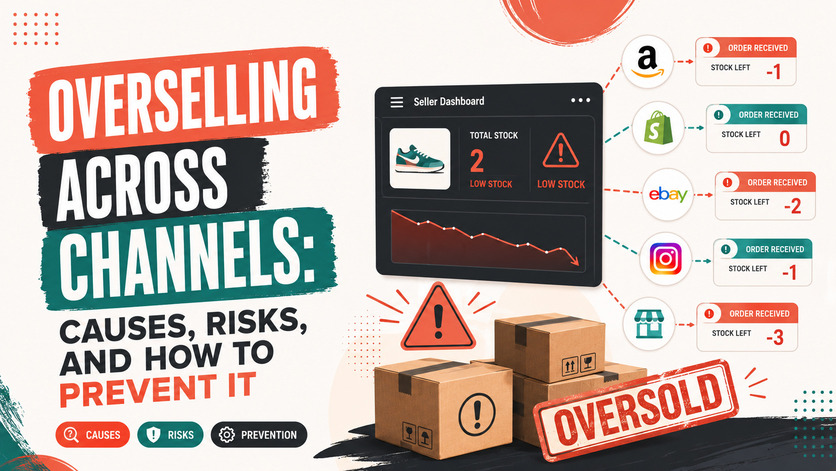
Without it, your Shopify store, Amazon Seller Central, eBay, and TikTok Shop are all "islands." They don’t talk to each other. If you have 10 t-shirts in your warehouse and sell 4 on Amazon, your Shopify store still thinks you have 10. That’s a recipe for overselling, frustrated customers, and account suspensions.
The "Bridge" Between Sales and Fulfillment
A MOMS acts as the "Single Source of Truth." It connects to your sales channels (where you sell), your warehouse or 3PL (where you store), and your shipping carriers (how you deliver). When a sale happens on Point A, the system immediately tells Points B, C, and D to update their stock levels. It handles the order from the moment the "Buy" button is clicked until the package hits the customer’s doorstep—and even handles the return if things don't work out.
Why Businesses Need a Multichannel Order Management System
I’ve spoken to dozens of founders who tried to "brute force" their way through multichannel growth using Excel. It works when you have 10 orders a day. It breaks when you have 100. It becomes a nightmare when you have 1,000.
1. The Death of the Spreadsheet
If your morning routine involves downloading CSV files from three different platforms and merging them in Excel, you aren’t running a business; you’re performing data entry. Humans make mistakes. A typo in a SKU or a missed row in a spreadsheet leads to "ghost inventory"—selling products you don't actually have. In the world of high-velocity e-commerce, a spreadsheet is a liability, not a tool.
2. Meeting the "Amazon Expectation"
Customers in 2025 don’t care that you’re a small team. They expect "Amazon-level" service: instant order confirmation, real-time tracking, and lightning-fast delivery. If your manual process takes 48 hours just to get an order to the warehouse, you’ve already lost the customer’s trust. A MOMS automates the communication loop, ensuring the customer is never left wondering where their money went.
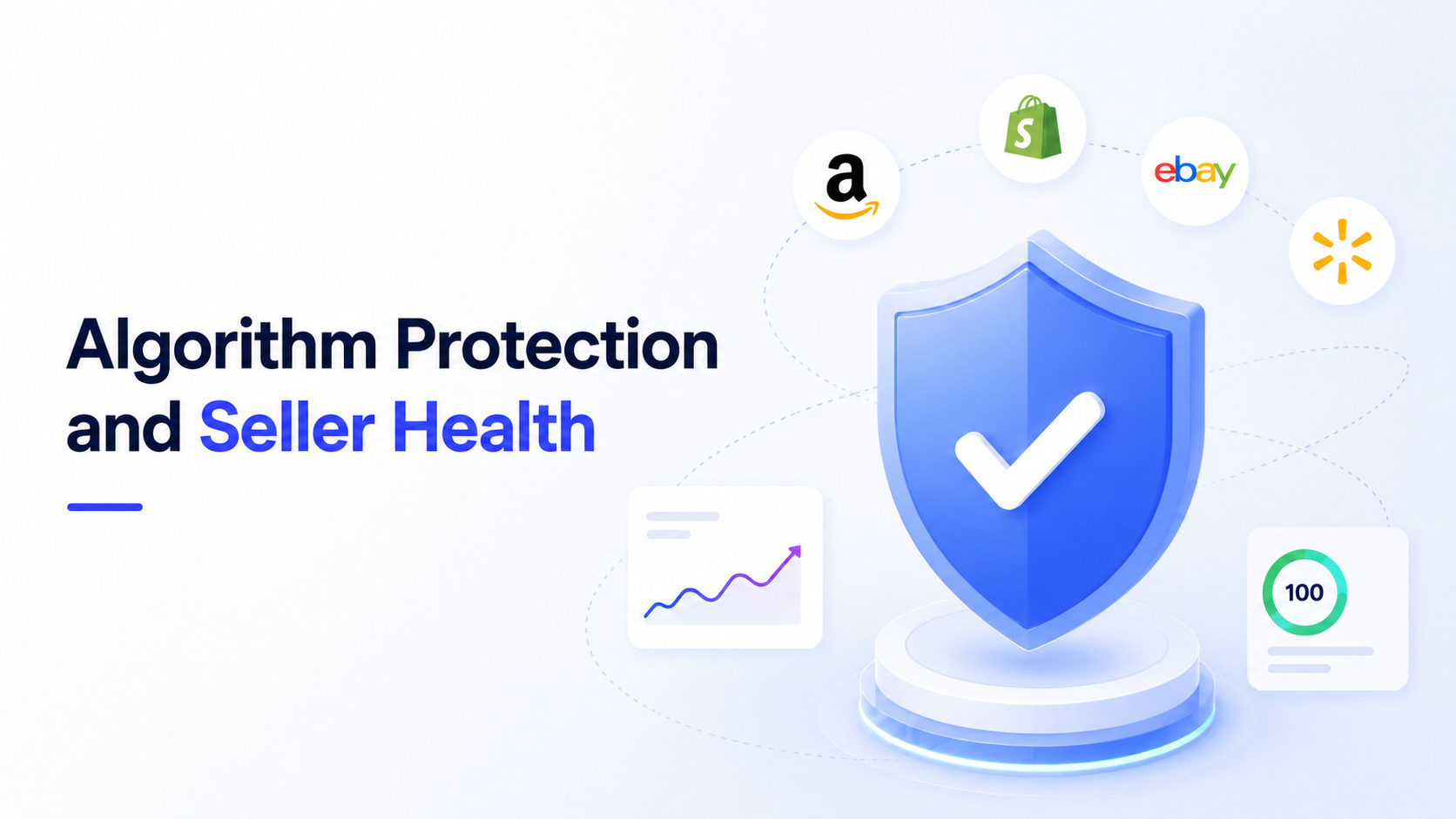
3. Algorithm Protection and Seller Health
Marketplaces like Amazon, Walmart, and eBay are notoriously strict. If you cancel too many orders due to being "out of stock," your seller rating plummets. In the worst-case scenario, you get banned. A MOMS isn't just about efficiency; it's about insurance. It protects your standing on the platforms that drive your revenue.
4. Diversification is Survival
Relying on a single platform is dangerous. If Amazon changes its algorithm or Shopify goes down, your revenue hits zero. To survive, you must be everywhere—social commerce, marketplaces, and your own D2C site. A MOMS is the only way to manage that complexity without tripling your headcount.
Benefits of Using a Multichannel Order Management System
Investing in a MOMS isn't just an expense; it’s a strategic move that pays dividends in "saved time" and "prevented disasters."
Absolute Inventory Accuracy
The most immediate benefit is the elimination of overselling. By syncing inventory in real-time (or near real-time), you can confidently list your full stock across all channels. This increases your "virtual" shelf space without increasing your actual risk.
Drastic Reduction in Operational Costs
How much are you paying staff to manually type tracking numbers into Shopify? Or to cross-reference addresses? A MOMS automates these repetitive tasks. Many businesses find that after implementing a MOMS, they can handle 3x the order volume without hiring a single new person.
Enhanced Customer Experience
When your system is automated, the customer gets their tracking link the second the label is printed. If they call to change an address, your support team can find the order in one click, regardless of where it was placed. This level of professionalism builds brand loyalty and reduces "Where is my order?" (WISMO) tickets by up to 40%.

Better Data Insights (The Big Picture)
When your data is fragmented, it’s hard to see the big picture. A MOMS provides unified reporting. You can quickly see that while Amazon has higher volume, your Shopify store has higher margins. You can identify which products are "dead stock" across all channels and run promotions to clear them out.
Key Features of a Multichannel Order Management System
Not all systems are created equal. When you’re shopping for a MOMS, look for these "non-negotiable" features:
1. Centralized Inventory Sync
This is the heartbeat of the system. It should support "Inventory Mapping," allowing you to link different SKUs across platforms (e.g., "Blue-Tee-S" on Amazon and "BT-Small" on Shopify) to a single master product in your warehouse.
2. Automated Order Routing
If you have multiple warehouses or use a 3PL, the system should automatically route the order to the location closest to the customer. This reduces shipping costs, minimizes your carbon footprint, and speeds up delivery.
3. Shipping Integration and Rate Shopping
A great MOMS integrates directly with carriers (UPS, FedEx, DHL) or shipping aggregators. More importantly, it should offer "Rate Shopping," automatically selecting the cheapest or fastest shipping method based on the rules you set.
4. Kits and Bundles Support
If you sell a "Skincare Set" that consists of a cleanser, a toner, and a moisturizer, your MOMS needs to be smart enough to deduct one unit from each individual item's inventory whenever a set is sold. This is notoriously difficult to do manually.
5. Multi-Currency and Multi-Language Support
As you scale globally, you’ll need a system that can handle different currencies and tax requirements without breaking your accounting.
Best Multichannel Order Management Systems
The market is crowded, but after years of observing the e-commerce landscape, these are the top contenders that actually deliver on their promises.
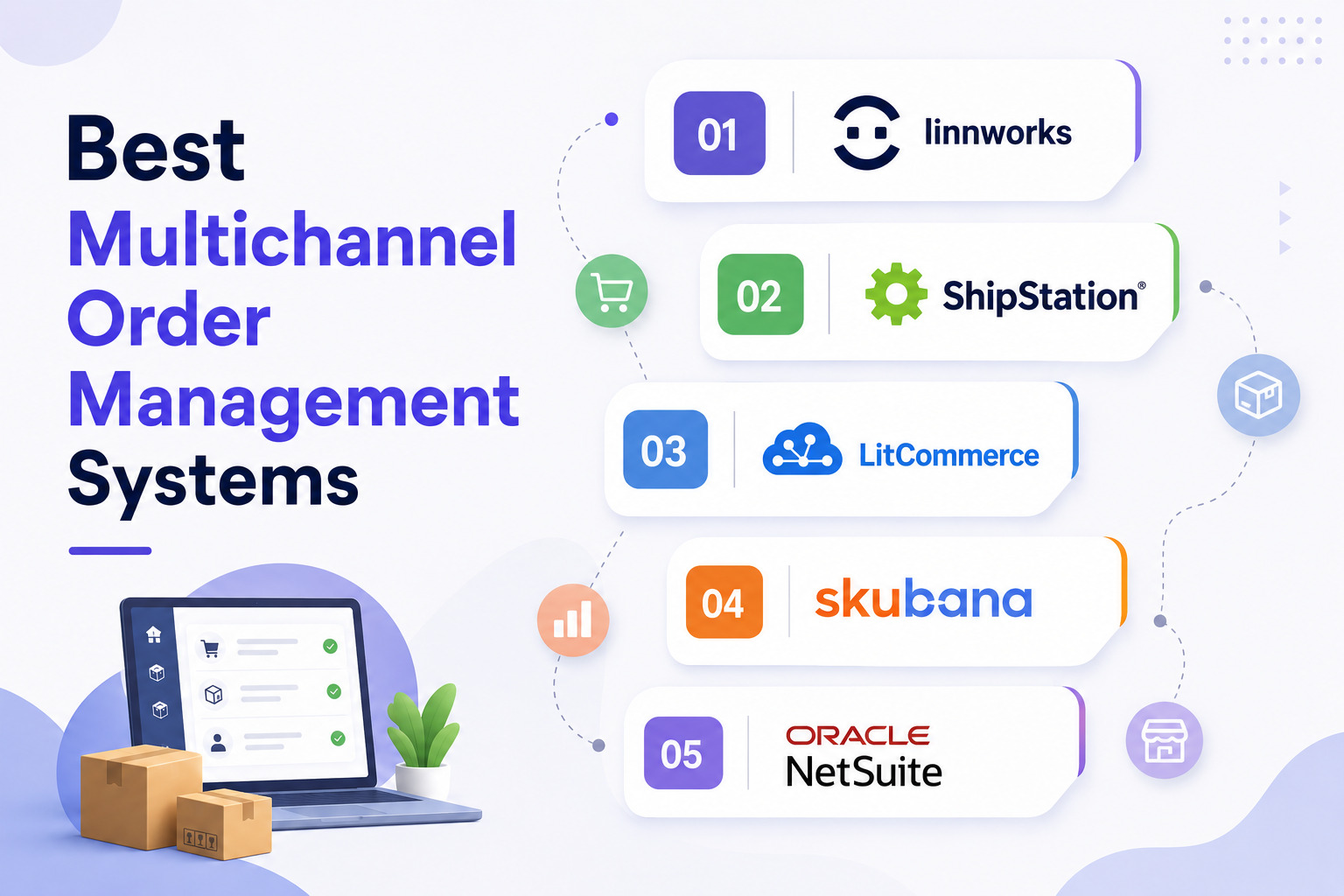
1. Linnworks (The Global Powerhouse)
Linnworks is a heavy hitter in the MOMS world. It is built for high-volume sellers who operate on a global scale. It offers incredibly deep integrations with hundreds of marketplaces and shipping carriers worldwide.
- Key Strength: Their automation engine. You can build complex "If This, Then That" rules for almost every part of the order lifecycle.
- Best For: Mid-to-large enterprises with complex logistics and international sales.
2. ShipStation (The Logistics King)
While many know ShipStation primarily as a shipping tool, its order management capabilities have grown to be quite robust. It aggregates orders beautifully from almost any source you can imagine and provides world-class shipping discounts.
- Key Strength: Unmatched shipping carrier integrations and a very strong mobile app for managing orders while on the warehouse floor.
- Best For: Merchants who fulfill their own orders and need the best possible rates on labels.
3. LitCommerce (The Growth & Listing Specialist)
LitCommerce has rapidly become the "goldilocks" solution for small to mid-sized businesses. It strikes a perfect balance between power and simplicity. It is specifically designed for merchants who want to list and sync products across a multitude of channels—including Shopify, TikTok Shop, Etsy, eBay, and Amazon—without a steep learning curve.
- Key Strength: Their "Listing Tool" is a game-changer. It allows you to take your existing product catalog (from Shopify, for example) and "push" it to Amazon or eBay in bulk, automatically mapping the categories. It makes multichannel expansion feel like a few clicks rather than a few months of work.
- Best For: Growing brands that want a "set it and forget it" inventory sync and a streamlined way to launch on new marketplaces quickly.
4. Skubana (Extensiv)
Skubana is built for the "Operations Pro." It focuses heavily on business intelligence and "Profitability" tracking. It doesn't just manage orders; it tells you if you’re actually making money on them after all marketplace fees and shipping costs are considered.
- Best For: High-volume sellers who are expanding into D2C and need granular data to protect their margins.
5. NetSuite (The Enterprise Standard)
If you are a multi-million dollar corporation, NetSuite is the "Endgame." It is a full ERP (Enterprise Resource Planning) that includes order management. It is expensive and takes months to implement, but it can handle virtually anything.
- Best For: Large corporations that need HR, Accounting, and Order Management all in one massive, unified ecosystem.
How to Choose the Right Multichannel Order Management System
Choosing a MOMS is like picking a business partner. If you choose wrong, the "divorce" is expensive and messy.
Step 1: Audit Your Current Stack
List every platform you currently use and every platform you plan to use in the next 12 months. Do you need TikTok Shop integration? Do you use a specific 3PL that requires an API connection? Make sure the MOMS has "native" integrations for your most important channels.
Step 2: Evaluate the Setup Time
Some systems (like LitCommerce) can be set up in an afternoon. Others require a dedicated consultant. Be honest about your team's technical ability. If you don't have an IT department, look for a SaaS solution that prioritizes user experience.
Step 3: Check for Scalability
Look at the pricing tiers. Does the price jump exponentially once you hit 1,000 orders? You don't want to be penalized for succeeding. Find a partner that offers a clear path for growth.
Step 4: The "Support" Stress Test
During your trial, ask a complex question to their support team. See how long it takes them to reply. When your system goes down during a holiday sale, you need a partner, not a generic help ticket system.
Frequently Asked Questions About Multichannel Order Management Systems
Q: Can I use a MOMS if I use FBA (Fulfillment by Amazon)?
Absolutely. In fact, it’s highly recommended. A good MOMS can track your FBA stock levels and even help you manage Multi-Channel Fulfillment (MCF), where Amazon ships your Shopify or eBay orders for you.
Q: How is a MOMS different from an Inventory Management System (IMS)?
The lines are blurring, but generally, an IMS focuses on the stock (purchase orders, warehouse locations), while a MOMS focuses on the order (customer data, channel syncing, shipping). Most modern platforms handle both.
Q: Is it worth it for a small business?
If you sell on more than two channels and do more than 50 orders a month, yes. The time you save on manual entry and the money you save by preventing overselling will usually cover the cost of the software within the first 30 days.
Conclusion
The era of "Single Channel" e-commerce is over. To build a resilient, profitable brand in 2025, you must meet your customers wherever they are—whether that's scrolling on TikTok, searching on Amazon, or browsing your dedicated website.
But you cannot scale a multichannel business with manual effort. A Multichannel Order Management System is the foundation upon which you build your empire. By choosing a solution like LitCommerce or Linnworks, you are not just buying software; you are buying the ability to scale without losing your mind.
Stop fighting with your spreadsheets. Stop apologizing for out-of-stock items. It’s time to centralize, automate, and finally take control of your multichannel future. Your customers (and your sanity) will thank you.


.jpg)